
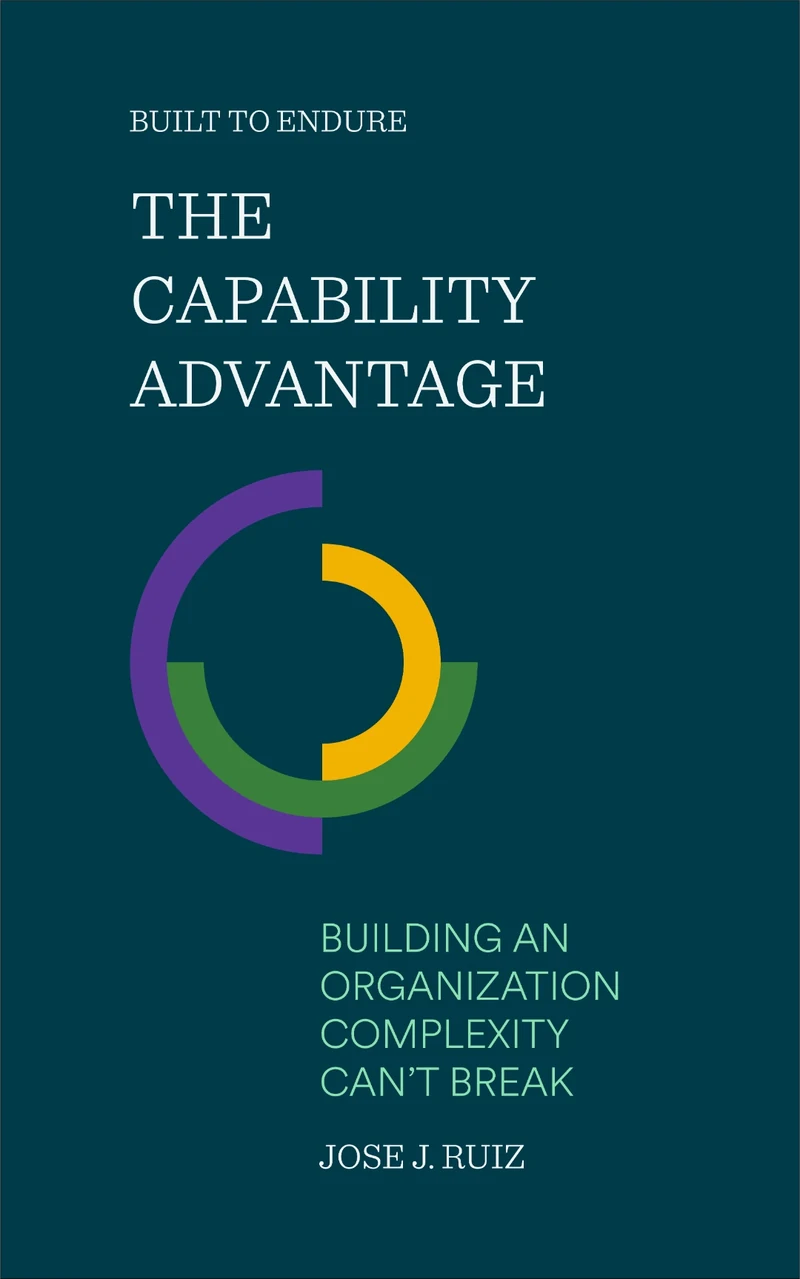
About the book
Executives routinely collapse three terms that behave very differently under pressure: ability, the skill you can execute now; capability, the judgment that holds complexity across time; and capacity, the scope and scale at which both can be applied without losing coherence.
When those distinctions collapse, leaders reach for the wrong lever — more training, more pressure, more headcount, more approvals — and the organization pays in rework, bottlenecks, and quiet exhaustion.
Trust and durability are not slogans. They are built through visible trade-offs and decision discipline that has to travel through the system to hold. The book introduces Judgment Portability: the basis for a decision travels intact, so people can act with integrity without needing proximity to authority.
What you will find inside
- Working definitions of ability, capability, and capacity — and the failure modes when they are conflated.
- The Zoom 2020 case, used to make the mechanism concrete: how a company pays for trust with visible trade-offs.
- Diagnostic questions that reveal which lever an organization is actually pulling.
- A practical view of designing decision rights so judgment holds when the room is not in the room.
Who it is for
CEOs and boards navigating growth, transitions, or trust crises; chief people officers building capability at scale; and leadership advisors who want a language that separates the levers executives keep confusing.
Get the book
Buy The Capability Advantage on AmazonOrdering for a team or a course? Ask about bulk copies.
More from Elavant Press
AI in the Org Chart
A Leadership Guide to Implementing AI Without Losing Human Judgment, Accountability, and Trust
Selling By Design
A Smarter Way to Hire, Deploy, and Grow Talent for Sales Success
The Leadership Competency Playbook
Mastering Competencies Across Levels of Work